Friday, January 28, 2022

I would love to stand corrected. We left the golliwog concept behind, didn't we!


Breaking news: I saw Dreams Beyond the Shore come into my inbox about 3 times recently as one of the books recommend for me by Amazon. I do not know if that was because of my post or because of the publisher’s/author’s promotion. The mystery of algorithms! H
owever that's why it's headlining my blog again. 

 I am glad that Bocas Lit has added a prize for Children’s Literature. As we also consider the enthusiasm of the young publishers and writers now, I feel as if all we have done over all these years is bearing fruit,  

However, we still seem to be out in the wilderness with Young Adult (YA) Literature. I have noted previously the importance of the Burt Award, and that if it was withdrawn from this region to be given to First Nations in Canada, one could not but honour and respect  that.

You may recall that as part of the Burt Award process 2,500 copies of each book were to be subsidized and given to schools across the Caribbean. Has this happened? If so how come we haven’t  heard anything about these donations, seen pictures of beaming school children and principals  with book donations, book covers splashed across front pages of regional newspapers, or if that is too much to ask, tucked away somewhere inside. I am told that with very little fanfare they were given away to charitable organizations,  and not  so much to the schools. I would love to stand corrected on this. Surely we couldn’t let that opportunity  for exposure pass us by. If we did indeed print 2,500 of each and give them out with no fanfare, nor recognition of their significance,  then we deserve to have Enid Blyton (now dark-washed for modern consumption) get up out of her grave and write her golliwog stories all over again. And yes, I read them and so did my first daughter, who couldn’t understand why the golliwog was always getting into trouble. That’s when I realized I had to start writing, so by the time the second daughter came along there was other material. We were no longer left to wonder about the connection between ourselves and golliwogs. Subtle racism and  colonial indoctrination.       

Now it is possible that in the last 2 years we’ve all been made distraught by the pandemic. I may not have heard anything.  Therefore I could be wrong about donations of books. Please tell me if I am. However this award had been running since 2014; that was from before covid.

Of course, the students in secondary schools have set books. Why should we care whether they read additional books or not. Why should we care whether  young adults  read anyway? We did our best with them in primary/prep. The set books in secondary, many of them classics, whether European, American or Caribbean, cover a range of human emotions and experiences. They will soon be adults, and readers will read and the rest won't. 

Of what value is the reading  our own books to the young adults of our region? Well a clue might be that the same overseas publishers who sell their books to us are also filling the needs of their own target audience. Aha, guys, aha!

I'll look at this further in my next blog.


Saturday, November 27, 2021

Romance and Reality in a Caribbean Young Adult Novel


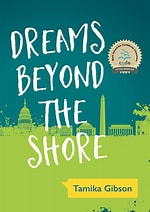
Read this book: Dreams Beyond the Shore  


I have not in all honestly seen romance portrayed in Caribbean young adult books. I would think it would be portrayed as something dangerous and to be avoided at all costs especially if you are still in school and have exams to study for. Or at least just a mild suggestion of it; manageable for both write, school librarians (if there are any libraries that carry young adult books –sorry but it’s one of those days when I just don’t think we try hard enough) and all other gatekeepers. If I’m wrong please let me know. And yet all our young people are maturing and would be interested in romance even if there wasn’t social media, and now there is social media.

A book I found delightful was American Panda (Simon Pulse, 2018) by Gloria Chao. That’s what made me start thinking about romance in YA literature. The characters are actually at university so it’s probably a bit older than the YA we are accustomed to writing. There’s a lot of flirting taking place and a totally unmentionable scene when I thought the heroine was totally unflappable. It’s hilarious; it portrays the difference between Asian parents of one generation, and the family expectations for their (American) college children including, naturally, who they should marry. It’s a theme we’ve met in adult novels and movies, to me always fascinating. I was surprised that the protagonists would face problems from their families because one is Taiwanese and the other Japanese. All Asians are not the same; I would think it would be most appropriate for America at this time of increased migration of different ethnicities and discovering Asians face prejudice also. It’s the  migrant experience in the USA. Anyway if you run  across it, read it, I think you’ll enjoy it.


And then my friends I came across the 2016 first prize winner Burt Award for Young Adult Literature by Tamika Gibson. I Love it! It’s set in Trinidad and it does not shy away from the realities of our lives on the islands in this region. Tamika Gibson hits every right note, corruption where you don’t expect it to be, political activities, family wishes for their children versus  their children’s desires, and a little romance between the two most delightful teenage protagonist I’ve ever met. And the Trinidadian language is like music to our ears.

I think the blurb describes it best. ‘Seventeen-year-old Chelsea Marchand was pretty satisfied with her life. Until recently! Willing to play the dutiful daughter as her father’s bid to become Prime Minister of their island home brings her family into intense public scrutiny. Chelsea . . . becomes increasingly disturbed by her father’s duplicity. She finds a reprieve when she meets Kyron a kindred spirit encased in low riding jeans. ( the only time I’ve liked low riding jeans, but it’s a reality for modern teenagers and so I learnt something). The two share a bond as he too struggles to get beyond his father’s shadow.


Dreams Beyond the Shore is a heartwarming story declaring that decisions matter far more than destiny. ‘

What a fantastic concept for our young people to comprehend! which is why the image is here twice.


Tuesday, October 19, 2021

Hindsight from 2021: Dispatches from 2016; still relevant: Diane Browne's latest - West Indian children's guides to self acceptance: Sunday Observer, May 15

 To get myself restarted after this long absence from blogging, writing and even reading, I thought I'd look again at  some old posts from long ago which still had relevance. Many of them still do. And if, like many writers, you have found that covid has sapped your energy and the desire to create, hopefully this will help us.  I feel that perhaps  I can start again, that maybe my downsizing and having to clear out the study is possible without falling flat on the ground amongst books and files from every workshop I've run. I have takers for the Jamaica Journals! What more could one ask! I read some of my stories left untouched  and actually liked one very much.  No, I have not deserted my latest love. It is a YA. So I invite you to come with me as I see what all these changes, one top of the other, uncover creatively.


The launch of the prize-winning The Happiness Dress and Abigail’s Glorious Hair took place on May 10, at the Kingston and St. Andrew Parish Library. The launch was lovely; much thanks to all those who helped with it and participated in it, and those who attended it. The guest speaker, Dr. Kim Robinson Walcott,  made an excellent  speech. It is published in Bookends in The Sunday Observer today, along with covers of the two books launched, as well as other book covers of mine. Thanks to Sharon Leach of The Observer for the coverage of Kim’s speech and my books. Kim’s speech and the launch will provide content for more than one blog, because she touched on so many things which impact the writing and publishing of children’s books in the Caribbean.  Quote from her speech: I wish books like these were around when I was a child. I wish books like these were around when my children were young. This is the type of material that we need to engender pride in our culture and ourselves.


The headline in The Sunday Observer is shown above. I have to thank Sharon for that headline. It is such an astute point of view, and changed the direction of this blog.  Apart from the two books being launched,  the other books highlighted on the page are Island Princess in BrooklynEbony and the Auntie of the Starlighta Caribbean Cinderella story and Cordelia Finds Fame and Fortune. I know that many of my stories focus on  identity and  celebration of ourselves,  but it wasn’t until I read that headline that I fully understood the variety of ways in which we can say "I am me and that’s very fine." 

 Cordelia is teased  because she is different from the other children in her village. She discovers that once you accept yourself the teasing stops, and that what is different about her  can be what contributes to  success.  Princess struggles against having to  replace her beloved Jamaica with Brooklyn, and fears she will lose her concept of who she is. She discovers that her self-concept will not be lost or replaced. It will only grow, and that you can love both Jamaica and Brooklyn like all the other Jamaicans in the diaspora, and that she can love her mother as well as her granny. Ebony, from a children’s home,  proves children from children’s homes can be successful, and she escapes  the traditional Cinderella story, by not only marrying a man worthy of her, (it isn’t that she has to be worthy of him), but earns shares in his spice factory, and trains and employs other girls from the home to work with her in the company.

In The Happiness Dress, Carolyne proves what she already knows,  that it’s okay to accept that you reflect the Caribbean even when you are in another place, and she is the happiness of her Daddy’s heart. And finally Abigail! To quote Kim: Abigail's poufy hair is nothing like a Barbie doll's, but Abigail  doesn't care two hoots about that. What a wonderfully self-assured little girl, in love with her own glorious hair, and by extension her own glorious self. You just have to look at Rachel Moss’ illustration of Abigail looking at herself in the mirror, to be assured of this.  It’s a wonderful synchronicity that most of these books have been illustrated by the talented Rachel Moss, who is gifted  at interpreting what  the writer imagined.


And now, guys, you know how we wonder if Caribbean children’s literature makes a difference, even though we, the writers, know that it does. But how do you quantify it, we ask, to prove its importance to others?  Okay! I have news for you! One of my friends bought the books at the launch for her grandchildren. She just sent me an email and photo of her little granddaughter who  wanted her hair let out for church this morning, just like Abigail's. Truly guys!  We have to continue writing.  As Kim said in her address: The road is long but we have to keep on going. For the sake of our children’s self esteem, we don’t have a choice.
 
Photos: top left of Dr. Kim Robinson Walcott, courtesy of Michael Reckord. Me, signing books: courtesy of Camille Parchment

Tuesday, June 15, 2021

Dispatches from the Book Collector: Batch 2


Dispatches from the Book Collector: Book giveaway 

 Hi Guys,

I'm downsizing and have to give away my precious, precious books. I'm going to be posting lists on my blog. You can contact me at <mdianebrowne@yahoo.com> should you want any. If you see one of your books here, please don't feel that your work doesn't matter to me. It does, that's why I have it. They just can't all go with me. So I've decided to keep some Caribbean reference books and some children's. Please pass the lists onto anyone who might be interested. Another list will go up tomorrow, and so on. 

Books to be Given Away: Batch 2

  • Run Big Fraid: Easton Lee
  • Caribbean Women Writers: ed: Selwyn R. Cudjoe
  • Magic Seeds: V.S. Naipaul
  • Green Days by the River: Michael Anthony
  • Slave Women in Caribbean Society, 1650 - 1838: Barbara Bush
  • Historic Roseau: Lennox Honeychurch
  • Trade Government and Society in Caribbean History 1700--1920
  • A Collection of 19th Century Jamaican Cookery and Herbal Recipes: John McKenzie Pringle
  • Jamaican Holiday: the Secret Life of Queen Victoria: Jonathan Routh
  • Edna Manley, the Diaries: Rachel Manley
  • Anna Karenina: Leo Tolstoy
  • Working with Dreams Montague Ullman and Nan Zimmmerman
  • The Seven Spiritual Laws of Success: Deepak Chopra
  • Poet Speak: selected by Paul B. Janeekco
  • Singing and Swinging and Getting Merry for Christmas: Maya Angelou
  • Gloria: Kerry Young
  • The Power of Story: Jim Loehr
  • Growing Younger, Live Longer: Deepak Chopra
  • Unconditional Life discovering the Power to Fulfill Dreams: Deepak Chopra
  • Many Masters Many Lives: Dr. Brian Weiss

Monday, June 14, 2021

Dispatches from the book front: Book giveaway 1

 Hi Guys,

I'm downsizing and have to give away my precious, precious books. I'm going to be posting lists on my blog. You can contact me at <mdianebrowne@yahoo.com> should you want any. If you see one of your books here, please don't feel that your work doesn't matter to me. It does, that's why I have it. They just can't all go with me. So I've decided to keep some Caribbean reference books and some children's. Please pass the lists onto anyone who might be interested. Another list will go up tomorrow, and so on. 


List of books to be given away: Batch 1

·         Blood and Fire: John Marquis  (something to do with the Duke of Windsor)

·         Arch of Fire: Barbara Lalla

·         Stone Haven: Evan Jones

·         Singerman: Hazel D. Campbell

·          White Teeth: Zaidie Smith

·         Cascade: Babara Lalla

·         Drumblair: Rachel Manley

·         Dog-Heart: Diana McCauley

·         Huracan: Diana McCauley

·         Great Tales from English History: Robert Lacey

·         Going Home to Teach: Anthony Winkler

·         These Days I Celebrate: Raymond Mair

·        Learning to be A Man: Barry Chevannes

·        Trust the Darkness: Anthony Winkler

·        The True History of Paradise: Margaret Cezair Thompson

·        Images, Heroes and Self Perception: the struggle for identity – from mask wearing to authenticity: Lou Benson

·        Maroon Heritage, Archeological, Ethnographic and Historical Perspectives: ed: E. Kofi Agorsah

·        Jamaican Energy: Raymond Wright

·        Growing up with Miss Milly: Sybil Seaforth

·        Cambridge: Carly Phillips (regretfully some pages brown)

·        Bellas Gate Boy: Trevor Rhone

·        The Right to be Proud: A bright guide to Jamaican heritage sights: David Buckley


Monday, May 10, 2021

Breaking Barriers or Just Peeping up Through the Glass Ceiling

 Of what value is Young Adult literature? Said often by those  who are inclined to dismiss children’s lit as well. It would seem that YA should either be categorized as fitting into the chapter books of middle grades or into adult genres. These people would also say isn’t there Nancy Drew and Hardy Boys? No, I’m not going to start off this blog with a rant. But the world has changed big time since Nancy Drew and Hardy Boys. These books are read by children under 12. They are fun but add nothing to our lived experience.

So first let’s say that YA for the Caribbean, just like children's literature, is important for self acceptance and consequently self confidence. 

There was an interesting comment from one of the panel members on a Bocas Lit session on the 100 books that 'formed us' on the weekend of  25th April.  It was suggested that the 100 books that formed us  could be divided into those with which we are familiar, sometimes on school book lists,  and others that we were unfamiliar with.  Interesting! I had not thought of it that way. Yes, I read Miguel Street, (often on set book lists) and I agree that the novels of  Naipaul,  Selvon, Mittleholzer and to top it off, Merle Hodge’s Crick Crack Monkey formed and informed me. Crick Crack Monkey has some of the most powerful  statements on the socializing effect of colonialism. I used to start writing workshops with quotes from it. These may  no longer have the significance to the younger generation now writing and publishing as they did for us. These young people are perhaps more exposed to Caribbean culture (we lived it), but more Americanized. There is still much to be learnt about the Caribbean we share with our sisters and brothers of this region, and if we don’t, we do so at our peril.  The lack of recognition of our commonalities (not common at all) in this upside down world with it’s pandemics and climate change shall leave us perishing in hot sun, rising waters and hurricanes.

Consequently I want to share with you books (Burt Awardees - my heart is broken about the abrupt ending to this dream come true. Look at the wealth of talent it has unearthed.)


The first is: The Art of White Roses  by Viviana Prado-Nunez. (winner 2017 Burt Caribbean award – Papillote Press ) I love this book! The cover is enticing, a girl half seen entering through a door, perhaps encouraging  us into her world. It is set in 1957 Cuba and strange things are happening, neighbours are disappearing.  The author's use of language is gorgeous, her writer’s voice welcoming and warm, including with it everyday life, lurking with danger. The protagonist is 13 but grows up as young people do in times of great social change and revolution. I myself found the ending surprising, humane; this ending is worth discussing. New York bestselling author Daniel Jose Older says: "The Art of White Roses is a gorgeously written story, full of nuance, sadness, and the joy of growing up. A terrific debut from an exciting new voice in young people’s literature.” The writer was born in Puerto Rica and lives in the USA. I’m glad that her voice is included as part of our Caribbean literature, our 'own  voices.'

Another book I liked was Girlcott by Florenz Webbe Maxwell ( Burt Caribbean 2016 winner - Blouse and Skirt Books ). It’s set in Bermuda.  When I was young all we knew about Bermuda was that it was picture perfect, a tourist destination,  run by white people and people of colour had no say in anything. All they had was money from tourists. Well this book opened my mind. It’s about a boycott of the segregation in theatres.  So often we sit in judgement when we do not have the full story. I  developed a new respect for the people of Bermuda. Now if I, who actually experienced colonialism, didn’t know this, how are young people to know and to understand the significance of what has taken place in the region? 

( I get a lot of my knowledge of history from novels. That’s why writers must do their research properly, especially for books for Young adults and children.)


The other book I want to mention is called Home Home, by Lisa Allen-Agostini. It is set in the Canadian Midwest and the protagonist is a Trinidadian teenager who is depressed (Papillote Press). So we acknowledge the diaspora. Good! The significance of the diaspora was also mentioned in the weekend  BocasLit panel. That depression in an adolescent  from the Caribbean is a focus of this book, is certainly a plus. There are probably more depressed adolescents in our societies than we can imagine. This book might give them the permission to look for help. The other ground breaking aspect of the book is that the aunt to whom the teenager  is sent  is a lesbian who lives with her lesbian partner. And they are both normal human beings. I don’t know if this will pass the gatekeepers any time soon, but at least it has been written.

 It seems that contemporary stories are suspect at best by the gatekeepers and cannot easily get through the glass ceiling for books, much less when they could be culturally controversial. I understand this, not only because I am an author, but because I’m an editor, and sometimes you have to say to the author, 'do you want this to be a challenge to the gatekeepers and even to the teachers, or not?’ However, if we are true to ourselves we write because we have a story to tell, and sometimes it may take us all into this modern and ever changing world.


Sunday, April 25, 2021

Bocas Lit Fest and your next YA novel

 This weekend Bocas Lit Fest is on virtually. Fantastic, eh! I have not been able to get on before, due to my own technological problems, but I'm enjoying it now.

And this, without apology, brings me back to the Burt Caribbean Award. 2014 was the inaugural Award. My book Island Princess in Brooklyn was shortlisted. The winners were Inner City Girl by Colleen Smith-Dennis; Musical Youth by Joanne Hillhouse; and All Over Again by A-dZika Gegele. They deserved to be winners; I enjoyed them, but here, in the essence of space and time, I can only mention some of the things that engaged me. I was literally on the edge of my bed with parts of Inner City Girl, saying, 'don't let him (predator in her 'family') back you into the house, girl.' I loved the knowledge of music that the youth had in Musical Youth, showing that young people can have interests other than what we might expect, while still being 'normal' youth. With All Over Again, nobody writes comedy like A-dZika!

The overseas sponsorship for the award having ended, I truly cannot see why another sponsor cannot step up.   As I said, give only a first and second prize, or only a first prize. One prize and seeing that a number of books are in schools is lunch/entertainment money for some companies. I once said that in a extended family function, I being an educator and writer (accustomed to no money) and many of the others being from the private sector. Well them nearly nyam me (eat, for the uninitiated into our Creole) but in this context, if they could have swallowed me whole, or shredded me first, they would have done so. Sacred cow? Now, with Covid fretting us, is not the time to approach anybody, public or private sector, but it is something to think about.

We should also, in all fairness, ask what has become of the Jamaican awards; Vic Reid Award (young adult) and the newly minted Jean D'Costa Award (children). For similar reasons mentioned above, this is not the time to pursue sponsors. However, do you know how many young people might have gained courage from these books, or those not yet written? It's a psychological fact that even though they are important, the lockdowns are taking their toll. Fright, depression and short tempers are all over the word. I promise you that the right book will help your young adult escape for a while; or show them that we are not the first persons to have gone through this sort of upheaval. Our Young Adult books are important for our young adults!

So guys, who is going to write a YA  book about the St. Vincent volcanic eruptions and the effect on the other islands, and as small islands we cannot escape. Conflict upon conflict, danger and more danger! Write it guys! By the time you finish we may have found a sponsor for YA Caribbean Awards. You can show them this blog, or just use your powers of persuasion.

Thursday, April 1, 2021

The Burt Caribbean Award for Young Adult Literature and our Authentic Voices: a much needed sponsor


I promised a comment on the Burt Caribbean Award for this next blog and yet thoughts on 'own voices' pull at me. Having thought about it some more, I find they are intertwined. As our young people move from childhood to the distractions of the teenage years, the period of further development of the self concept, bombarded by social media and  media in general, they need a cultural  anchor for this journey towards adulthood. I am not for one moment suggesting that we miss out on the exciting Divergent series, the emotionally engaging Hunger Games series, nor even the Nancy Drew/Hardy Boy books which, in fact, by now they have probably out grown. There are wonderful new and exciting books out there, books galore, books like sand. 

This is where the Burt Caribbean Award for Young Adult literature came in. I have enjoyed these books, become overawed at the ideas, the gorgeous language, the sway of emotions. And then suddenly the euphoria was over! It ended! I believe it was decided that money be directed instead to indigenous writers in Canada. ( Please correct me if this is wrong). I applaud this. It’s not my business, but I have wondered how the indigenous people of North America have been 'abandoned' for so long. I once created a bit of excitement at an overseas conference in the USA by asking a question about the country not supporting their development more. Chaos erupted! Shouting from people at the back and the front of the room. (On occasion I have been known to be carried away with emotion and done things like this.) When I explained to some Jamaican officers later, one said, “Then, Diane, you come to mash up the people’s country.”  "No," said I, "but this is not right." You know, Jamaican  righteous indignation. So I am overjoyed for this move. Not the same country, nor the same First Nations, but you get the drift.

So, guys, why can’t somebody here in the Caribbean be convinced to be a replacement sponsor for that award? Everybody supports adult writing. Brilliant! But are we going to treat YA writing like we have done with children’s for years. Adolescence is when our young people explore, interrogate values, attitudes, cultural norms. This is when they begin to become the adults they will be. So we say, 'what a way the teachers migrate, eh', 'what a way the nurses migrate eh', and so on.  Big time Brain Drain! However, people have always migrated from island nations, for economic reasons, more opportunities, but some stay. Some even go to study abroad and come back ( I did); the ebb and flow of island life. But what if, exposed to more YA literature, more caught the spirit of our lives, and wanted to contribute more of  themselves than remittances! What a something, eh! No, I’m not knocking remittances. People from developing countries all over the world go abroad to work to send money, barrels home. 

You are going to say that nobody can prove that reading your own literature as a young adult made a difference to the adult you became. Well, you can do a research paper on attitudes, values and behaviours  if you wish, to see what you can find out. We have enough Burt Award books for you to do that.

I’m not asking for any big prizes. Just give a first prize, if that’s all you can do. There must be a company, a trust, a 'somebody' that can do this. If I was wealthy I would do it in a heartbeat. Our own authentic voices call to our young people to let them know what we have achieved, what they can achieve. They can’t hear them if they can’t get the books, right?

So my next blog will identify some of the things I learnt from the Burt Award books that I never knew before, or things that I liked, engaged my emotions; or even those that made me wish I could write like that. Working on the cliff hangers!


Tuesday, March 16, 2021

Own Voices and the Authentic Voices of the Caribbean


Down sizing and clearing shelves of books, one entirely of children’s and YA literature; in a digital world not many people or even libraries want them. What then will happen to our voices for our children? I once did a presentation at an ASCD conference in the USA entitled, Our Authentic Voices Call Out To Us: Do we listen? I presented a local version  Authentic Voices: The Case for Caribbean Children’s Literature in Teachers’ Colleges in Jamaica. In both, I referred to writers like Merle Hodge (Crick Crack Monkey), Olive Senior, Lorna Goodison, and research papers which highlighted the significance of  authentic voices in the material for our children and young people. 

Suddenly, it seems, America has identified Own Voices, and the Black Lives Matter movement has led to the ‘discovery of minority (African American) writers and children’s books.’ Then, since the prejudice against Asians has been uncovered, Asians are beginning to be included. We cannot but be pleased. Inclusion is essential, we know. 

The term Own Voices has been around for a few years, from 2015, it seems. If I’m wrong about this please write me or post a reply on my blog and I’ll acknowledge it.  It seems the  term ‘own voices’ was brought  back into focus because someone had written a book, to great acclaim, about Hispanics, and then was criticized as not giving an accurate portrayal of the particular group by a member of that group. I am being deliberately vague because I do not wish to rake up a discussion, which must have been painful for the writer and the critic

 The quote continues: “Those books that are # Own Voices have an added richness to them precisely because the author shares an identity with the character. The author has the deepest possible understanding of the intricacies, the joys, the difficulties, the pride, the frustration, and every other possible facet of that particular life — because the author has actually lived it.”

I think this must be especially important with  books for Native American or First Nation children. Who else could ever tell their stories? I gather also that an African American had quite rightly pointed  out that he did not think 'others' should  be trying to write about the African American experience. However having made this point, he set a story in a country he had never visited and was called out on that.

So that leads us to another point of view: https://www.refinery29.com/en-us/2019/04/228847/...
Taken to its logical conclusion, this approach to storytelling will set strict and claustrophobic limits on imagination, confining authors according to an ever-narrowing concept of which identities, settings, or narratives are their own."

 What has this to do with us here in the Caribbean? Certainly, we have been telling our own stories from we started to write children’s literature. We recognized the need for our children to see themselves in books, to validate their lived experience, especially  in  our post colonial territories,  socialized by British stories fist,  followed by their American counterparts. While adult literature blossomed early it took some time for us to get to this stage where we see increasing awareness and acceptance of children’s and YA literature of our own, where perhaps we could say that we now have a third generation of authors and publishers.

Moreover we, as a multicultural, multiethnic region, seem to have worked out who can tell what stories. The challenge we face is not lack of representation of all our people in books;  we have built up  a trust amongst ourselves; we are sensitive enough not to write about what we don’t know. I can write about Indian children ( almost half of the population in Trinidad and Tobago and in Guyana) but the stories I have written are generalized, things that could occur among any group going to school, for example, Twins in  a Spin. Interesting though, there are twins in my family. This story is true to a twin experience that we in our family  had wondered about. So it is still ‘write what you know’. However, I would never write a coming of age book for an ethnicity  to which I do not belong, without consultation/a reader who represents this group. There is a connection, therefore,  to the concept of own voices and our authentic voices and validation of our lived experience.

This brings me to the importance of the Burt Caribbean Awards  for Young Adult stories, and regretfully its absence from our young adult coming of age lived experience. That will be for another blog.


Monday, September 28, 2020

Memories and Ancestors: to spark creativity


At last I'm writing a blog. I've been aching to do it. I have not written one in ages, even wondering if there is any point. But perhaps one needs to believe that there is a purpose. Maybe this is one of the characteristics of faith.  In the time that I've not written, so many, many things have happened in the world that would cause us to lose some aspect of faith.  And yet if we give in, then it will truly be all over. And in spite of lockdown, with all that time to write, many of us have not written. I think we are just overwhelmed. If you have written please tell us your secret.

I hope you can find this blog. Between my old blog address and the computer being determined to give me a new blog location, I'm not sure what will happen One of the things that technology does to you whether you want it or not. Yes, you can ask for help, but they are all robots so there is no recourse.

The posting below is just to remind us that we missed Calabash this year. It's clearly a long time since I've been but this post helps me, and hopefully you, to recall the joy of being with other creatives.


Memories of Calabash, 2014

 Calabash was, as usual, a feast of emotions. You come away from Calabash full of writing and determined to write, even if you don’t. But yes, I have, in spite of my Capricorn spirit which insists that 'work' should be completed before everything else. 

The last time we had Calabash and I did my blog on it, I focused on things said that I thought could be applicable to children’s literature. This time I think I’ll just share what moved me, what contributed to that gorgeous feeling of fullness to overflowing.

 Because I so admire the craft of writing and writers, just being in their presence can make me joyous. (Yes, I know I’m one too, but I don’t seem quite mysterious enough to myself). So to hear and see Mervyn Morris (our poet laureate then) and Velma Pollard, although I know them personally, is still a delight for me. Hearing Zaidie Smith -  a feast of words. I love the voice in her work, the voice in her voice.

 In the following, if anything is a direct quote, it would purely be by chance. Consider everything reported speech, and anything not quite right is my fault, and not that of the writer to whom the comment is ascribed.

 Karen Lord from Barbados pointed out that ‘choices lead to change and opportunity, and are the cutting edge of chaos, but even chaos cannot overcome choices’.  Fascinating! I’m still thinking that through. It’s as if this should after all be quite obvious, and yet there are depths still to be fully understood - implications. (  September 2020 comment: I have to look at that again, investigate it; turn it this way and that, especially at this time of chaos. There is a story here.) 

The interview with Salman Rushdie was a surprise for me. I had no idea that he had as many interests outside of what we might consider writers are interested in – whatever that might be. Heartbreak Hotel by Elvis Presley, a part of his past, his youth, like ours, others all over the world. I liked his statement ‘that fiction is a journey to the truth’, I liked that in his writing he has tried ‘to look at where private lives intersect with history’, my favourite type of story, ‘man is a story telling animal;  helping us to understand what sort of creatures we are’, with reference to Toni Morrison, ‘magical realism is another way of telling the truth’. 

What is it about Calabash? It is in itself magical; the venue combined with the auras of the people; no, I don’t think  it’s the camaraderie, although that is certainly there. It’s a quietness, a resting, even with the music drumming and throbbing, it’s quiet and restful (perhaps the genetic memories of the ancestors). The sea, the breezes? Ah the sea! Perhaps that is it. Just writing about it brings back the desire to write, to create.


From a 2019 pos
t:  I heard both Olive Senior and Lorna Goodison, at Talking Trees, 2019. Two of my favourite authors at the same literary Festival. My cup overflowed.

 Ann Margaret Lim was also there: a powerful performance: I was fascinated by her reference to her Chinese grandparent(s). We are indeed  an island of Out of Many, One People, in spite of some wanting to change our motto.  I would say to those who want to change the motto: Never judge others. You do not know what is in their hearts, what they hold dear. Do not attempt to erase other people’s ancestors. They are not yours to erase. For myself: All the people who went up into the making of me, I value; I celebrate the me that has survived throughout history. You know I feel strongly about this, don't you? I can be quite a little warrior. And now I have a beautiful new granddaughter (one year +) and she is part Chinese, and I am in love with her. Don't ever fool with me guys when it comes to our motto and who it represents. Sorry, clearly  I've been under lockdown too long.


Photo: Velma Pollard, Ann Margaret Lim, Raymond Mair at Bookophilia

(Change of font size in body text one of the mysteries of technology)


Friday, August 9, 2019


Lynn Joseph's Dancing in the Rain,  third place winner Burt Award for Caribbean Literature, 2015: another book answering the question why write? Or the power of stories
I see that my previous post was in May. Astonishing! I was supposed to be getting organized at that time, posting regularly. Well clearly not. In what the Americans are now calling the big 'reveal', I will let you know that my husband has  dementia. I thought it would be that he'd just get quieter and quieter and that would be painful enough, 'the long goodbye', as my doctor said. Sometimes he is, but at other times it's quite different, and today is one of those;  hallucinating and very noisy, shouting at his imaginary people. It's emotionally draining.  Yes, he has taken his meds. I feel like the 'deer in the headlights'. What would be an appropriate simile for the Caribbean? Can't think! I wonder if this could be the making of a story. I'm not sure how many young adults have to interact with people suffering from dementia or Alzheimer's, so perhaps it wouldn't be meaningful to them. However, that is why, to my surprise, I have not organized myself.
Therefore perhaps this is a good time to re-post Lynn Joseph's Dancing in the Rain (Blouse and Skirt Books/Blue Banyan Books), a Burt Award winning book. It deals with realities that sometimes we wish our young people didn't have to go through, and yet, increasingly in this world, they have to face so many challenges, so many things for which we have no explanation or even understanding.

I had a post about books that bear evidence to the power of stories. Dancing in the Rain is one such  book.

Offline for three days, one felt  lost in space without  the ritual of opening emails.  I decided therefore that  I could use the time to consider at least one philosophical question. Would there be an answer if one opened one's mind? I needed to make sense of things. And the world was not making sense.  No doubt, there are others who  feel the same from time to time, and especially in today’s world.

In stepped Dancing in the Rain. I was pulled into the story by the lyrical writing. It's a joy to read; images abound, almost like being able to watch the  frames of a movie gently gliding by.  Joseph's characters are delightfully drawn;  you do indeed get to know them, want to know not only the outcome of the story, but the outcome of each of their own personal stories. The colours of the Caribbean depicted are vibrant and magical.    

Against this mystical, magical background, two horrendous occurrences make their appearance,  the destruction of the Twin Towers in New York on 9/11, and the Holocaust. The main characters are suffering from the effects of  9/11.  It’s significant that a book for young adults should deal with a traumatic occurrence which falls within present memory. It is contemporary; it is topical in a world where so many things seem out of our control, so beyond our wildest imaginations, and not in a pleasant way. The Holocaust appears as   a story within the  story, its purpose to draw attention to the different ways people survive after a tragedy of immense  proportions. So, in a sense, it informs the present.

The young protagonists ask philosophical questions and seek answers to the things we adults ourselves often do not understand. Yet,  it seemed as if by interacting with the characters and their story, and the  really brilliant protagonists, we understand what we always knew, but sometimes forget, that the only one way to deal with disasters is with faith/ hope and courage;  Joseph more than once refers to the importance of hope.

Joseph also speaks about joy and love, 'you are my heart', 'you are my joy', both of which I firmly believe in, and which from time to time appear in my stories.

So  did I have a breakthrough as a result  of my  journey with Joseph's characters, their philosophy, their brand of magic? Well something happened. It occurred while reading Dancing in the Rain. I have never doubted the power of stories, the power of books.  I gave thanks for the power of this story.

Saturday, May 11, 2019

Young Adult Books and the Burt Award for the Caribbean


I thought I was going to be more organized and post regularly. In my defense there have been a number of passings of great people ( family or family friends) who contributed to Jamaica and the Caribbean, and we had to go to the funerals. Four in two months takes its emotional toll. And we must believe that indeed there are younger ones who will follow in their footsteps, even if they cannot fill their shoes.

I was most disturbed to read that the Burt Awards for the Caribbean YA books/stories will be discontinued due to the passing of the donor, and the decision of those in control of those purse springs to spend the money in other ways.  I am very, very sad about this. Wonderful work has been produced and my heart has been filled with joy over the talent displayed; and many of the writers are  young. No, Nancy Drew and company cannot replace them, as some have said. No, these are first class books and should be in every school, for reading, for discussion (no, not as set books), but to be recognized as recordings of our times and for knowledge and most of all, enjoyment.  A book for enjoyment? Yes, indeed! If our young people haven't found this out yet what a pleasure they have missed.

I plan to write a few words about the ones I've read (I haven't been able to access all) not a review really, but what I liked about them, the reason why I hope that Bocas Lit will find another sponsor. I will start with Gone to Drift, written by Diana McCaulay. It was a review by me, but more from the point of view of how it affected me, rather than a scholarly approach. I had posted this at a previous time, but it's more relevant to post it again here, as it will inform future postings about the other books .

In praise of "Gone to Drift" by Diana McCaulay: 
 
Prize Winner Burt Award for Caribbean  Literature, 2015:  Papillote  Press, 2016


This is a beautiful book. If it were a painting it would be in tones of grey and shades of blue for the sea, and for the land,  tones of beige and green, with splashes of colour added by the people who travel across its landscape. And I would buy it instantly for fear of losing it.  


This may seem like a strange way to begin a book review, and maybe this is not really an actual book review; maybe it’s more like in praise of good writing, a good story, and the environment. This last may seem too obvious to mention because we know that the author is a well known environmentalist. However, this book is not just an opportunity to recognize the importance of the environment; it is a hymn to it. You cannot read this story and come away unmoved by the significance of our environment and its importance to the characters in the story, and  to the island. 
The setting is the environment; more specifically the sea. The characters and  the sea are entwined in a dance, an embrace, which we  soon understand, can at any given time act  in favour of the human characters, or not.  It is this overarching character,  the sea, unmoved one way or the other by all that is happening,  and bearing  no animosity to anyone, that  forms the backdrop to this story.  This sea can bring you a bounty, yet you can get lost in it, gone to drift. 
 
Of the two main human characters, one is Lloyd, a young boy, who is worried about his grandfather, who has not returned from a fishing trip, in what  Llloyd perceives as good time. None of the other characters, mainly fisher families, Lloyd’s family, those who interact with them along the various coastal areas, seem to be very worried. You are left to wonder if, as they suggest, that perhaps there is nothing wrong;  Lloyd is unduly anxious. On the other hand, you wonder if it is that they do not wish to make Llloyd feel any more worried than he is. You fear that they know something that he does not, that they are not telling him the whole truth. 


The other character is Gramps, Lloyd’s grandfather, whose voice Lloyd can hear  in his head, “I come from a line of fishermen.”  This is as powerful as if the statement were, “I come from a  line of kings.” We believe this, a line of greatness.  


 Gramps  also tells his story.  And so we have the two stories, Lloyd looking for his grandfather, using any means necessary, his good friend, Dwight, the Coastguard, Jules, the lady who cares about the dolphins, his mother, his ne’re-do-well father, his grandfather’s friends; and Gramps’  story of his own father, his many brothers, all fishermen, and his mother. We come to care about Gramps’ family, as well as for Lloyd, whose determination and bravery in his search for Gramps often astounds us.  


It eventually dawns on us that Gramps is not on any of the main cays off the coast of the island,  but is stranded on what seems to be  a mere rock in the sea. The tension is created  not only by Lloyd’s search for his grandfather, the question of how  dolphins fit into this scenario, and whether his grandfather can be found in time, but also by seeing the  old man himself wondering how long he can survive on little crabs and rain water, the latter coming  sporadically.   


The author uses the device of alternate chapters for each of these two human characters, so that we can measure Lloyd’s attempts against the will of his grandfather to survive. It works; we are not distracted; rather, we  are caught up in the emotion of the situation.  


The language is measured, like a tale told on dark nights by lantern light, increasing  the feeling of  being at the mercy of the elements.  Descriptions are rich, as  seen in Gramps recollection of a sunrise.  


Then I realised that  I could see my hands and feet as a grey light stole across the sea. And to the east I saw the sky turning into a hundred different colours from the blue of a summer day to the dark purple of the thickest squall, from the pale pink of the inside of a conch shell to the bright orange of a ripe mango, until the round ball of the sun itself came up and the colours of the  sky spread over the water and even warmed our faces. I knew then that the best place to see a sunrise was at  sea.


It is for this reason alone that you cannot hurry through this book. Even as the mystery deepens, you need to stop to see what the characters see, to feel what they feel.
 Then, suddenly you may be caught unawares, by an intervention into this beauty, alerting you to  danger, which may be lurking, as in Gramps’ description of his brothers going to sea: 


It was late when they left and I thought the night was darker than usual.  We stood on the beach and watched them go. The boats made a ragged triangle formation, like a flock of birds, and for a few seconds their wakes were visible. Then they pierced the night and disappeared.
 
And you understand  in the sameness of their going to sea, the routines of their lives, the power of  nature, of the dark, of the night, of the sea.
The dialogue, which is a mixture of standard Jamaican English, and what I like to call a modified Creole, is well handled. It effectively represents  the mother tongue of our people, but does not become so deep as to make it difficult to read, or for the book  to travel to other countries. From Lloyd to his grandfather, to Jules the uptown girl, their voices ring true.  And this use of language, this love and respect for the sea, for the creatures of the sea, bridges what could be social differences and makes us one. 
Consequently, just as you come to respect the environment,  you come to respect the people who depend on the sea, and their way of life. The author does not allow you to feel any  pity for the difficulty of their lives.  This is a great skill, to describe another life with empathy. You may even begin to think that like Lloyd and his grandfather,  these people are the salt of the earth, or the sea, their nobility in facing the dangers of the sea  surpassing those who make a safe living from the land. And then the author brings you back to reality. These people are no better or worse than people anywhere. They have their nobility, they have their heroes and their villains, and their awful betrayals. 
This coming of age story of a boy called Lloyd, who loves his grandfather,  will leave many wondering about the meaning of it all, and yet Lloyd must make sense of it. 


This book should be read in all schools. To say that a book should be read in schools, makes it sound like a textbook, or the over-worked literature set-books. However, I would want all our young people to read it, to discuss it, and  that seems to be the only way to get it to them. This is a beautiful book!