Showing posts with label Una Marson. Show all posts

Tuesday, October 18, 2016

2016 Distinguished Lecture National Library of Jamaica: Una Marson and Alison Donnell


How do we get young people interested in this? (by extension, various aspects of the arts?). This question was asked me by an associate of mine at a lecture, "Una  Marson: Animating the Archive of an Extraordinary Life",  at the National Library of Jamaica on Sunday Oct. 9, given by  Professor Alison Donnell, Modern Literatures in English, University of Reading, UK.

How do we indeed, in a world where everything is judged by its technological significance and the written word reduced to only 140 characters long? How do we, in an island, where for many survival is the main focus of their daily lives? This question could probably be asked in many developing countries. I recall sitting on a panel doing interviews for tertiary scholarships. One of the panel members, and educator like myself, suggested to one of the interviewees that while at the University he should take advantage of artistic activities, like plays, which often offered a reduced price for students. This sounded like an excellent idea. It warmed my heart. The student replied that he could not afford even the reduced rate. He would need that for lunch or bus fare. Reality had given all our artistic ideas a jolt.

The event  I was attending on Oct. 9,  was the National Library of Jamaica Distinguished Lecture 2016, given by Professor Alison Donnell, ‘who has researched  and taught Anglophone Caribbean Literature for more than twenty years. Her PhD, at the Centre for Caribbean  Studies at the University of Warwick,  focused on an  under–researched archive of early Caribbean women’s writing’. 

The lecture highlighted Jamaican activist, broadcaster, journalist, poet and playwright, Una Marson’s achievements, and suggested that she had not received the attention she should have because she was a woman.  It was a fascinating and stimulating lecture. Thank you, Professor Donnell.  Thank you for highlighting one of our women.


How do I come into this? Una Marson lived both here and in London. My grandmother, Clarissa Escoffery, acted in two of Una Marson's plays staged here, London Calling and At What a Price. I had done a blog post some time ago showing the programme for London Calling with the signatures of the actors, including Una Marson’s. Professor Donnell had come across this post and asked if she could use images from it in her lecture. Social media can work  positively. Of course, I was honoured to say  yes, on behalf of myself and my grandmother. I am always thrilled when I can trace creativity from my grandmother, amateur actress, through my mother, amateur painter and professional creator of illuminated addresses (now done by computer), to myself, writer, and one time amateur artist.  I know, totally immodest; but I so love that feeling of continuity.

Another lovely aspect of the event was the pre-launch of Una Marson's plays, Pocomania and London Calling by Blouse & Skirt Books - Tanya Batson-Savage. You know my cup runneth over when I see a synchronicity of events like this. The book is a joint publication between Blouse & Skirt Books and the National Library of Jamaica. So great to see a publisher and the National Library cooperate for the enlightenment of the country and preservation of our cultural heritage. I am so impressed with this young publisher. Quality books and books which inform the publishing landscape.

Yes, I will be passing over my grandmother’s material to the National Library. We are all encouraged to pass on things which we may have which would add to the store of cultural knowledge.

Back to the question which was asked at the beginning of the post. How do we get young people interested in things like this? Of course, in any population, only a percentage will be interested in the arts, writing, music, painting, dancing. However, I think we feel that we would like to see more of our young people exposed and involved, not only because of the great creativity which exists in our country/the region, but also because we know that the arts can bring joy to the individual, and go towards creating/recovering a gentler society. Obvious answers come to mind; exposure in the school curriculum, and activities at schools, and this is certainly being done; institutions which cater to the arts, and they exist, and are active. Perhaps what we really want to ask is how do we touch all lives with artistic endeavour and appreciation for artistic achievement? How do we expose all lives to the sensitivity which comes from exposure to the arts, and by so doing,  create a gentler society?  I don’t have an answer. I write this in the hope that you who read this will have ideas and share them, and that together we can achieve this.

I do recall when I was working with Olive Senior (yes, the Olive Senior) at the Institute of Jamaica Publications, us having a poetry reading by Lorna Goodison at the Institute of Jamaica with 5th and 6th forms from as many schools as we could. The auditorium was almost full. The students were enthusiastic, and this had nothing to do with school set books; it had to do with poetry. Afterwards the students crowded around the stage like Lorna Goodison  was a rock star, (which she is, come to think of it) asking questions, just wanting to share with her their joy at having experienced the event. (If anyone who was there reads this and can tell me that my memory of this event needs some clarification/correction, please feel free to  do so). This occasion is right up there with important memories in my life. I was overwhelmed that the students were overwhelmed.

What has all this got to do with children’s writing and children’s books, you ask? It has everything to do with it. Early exposure! “Train up the child in the way he should go  . . . .”

Saturday, November 14, 2015

Despatches: Caribbean Digital Publishing Conference and Jamaican Literary Awards


The week of November 2 was a splendid one for writers, writing and publishing. First there was the JAMCOPY (Jamaican Copyright Licensing Agency) Onlinemind Caribbean Digital Publishing Conference, November 2-5, at the Pegasus Hotel. Presentations were made by Jamaicans, persons from other Caribbean territories and overseas (outside of the Caribbean). Excellent organization and execution. All presentations I attended were really interesting and informative.
What did I take away from this conference and how might this affect children’s books and writers?  First, it solidified digital publishing in my mind.  Maybe it was just that I was ready; when the student is ready the teacher will appear sort of scenario.
So to all children’s publishers and textbook publishers, you need to  engage meaningfully with this technology at some time, even if you are convinced that Jamaicans will be using print books for ages, since we won’t be able to afford tablets for all children. One presenter felt that children’s picture books were actually better as print books. Normally, I would have felt a surge of validation by this statement. This time I found it merely an interesting comment.
I found two sessions had a major impact  on me and made the entire conference worth my while. One was Born Digital: Creating an e-Book, with Troy Weekes of EZLearner Inc , Barbados. Mr. Weekes showed us how to produce an e-book using templates. Wonderful! And even though I managed to lose my e-book at the end of the session (these things happen while using technology) clearly I had been made confident enough to replicate the activity the next day without losing it. So I have been greatly empowered, even if I do not get to the point of being able to turn one of my children’s stories into an e-book myself. And who knows now? 

The other was Re-imagining Content for the Caribbean Classroom. This was presented by Allman Town Primary, a school for which I have a big soft spot as I had done some research there while doing my MEd.  The vibrant Principal, Mrs. Crooks-Smith, declared that they do not say that Allman Town is an inner city school, but rather it is a school in an inner city area. Important change of focus towards great expectations, eh. The children have been encouraged to create learning for themselves using technology. Students, looking smart in their navy blazers over the normal khaki uniform, explained how they used technology, how they created their own computer games.  For those who know me, I was blown away, sort of in heaven on earth. I thought of best practice being replicated, videos of their achievements to be sent all around the island, etc. (these are all ideas which the Ministry itself has for various aspects of education). So there is hope; always there is hope. Our children can be brilliant wherever they are if the right environment is provided. My take away from this was children, whatever their circumstances, can be  interacting with technology. I know; why has it taken so long for the penny to drop for me? The children in my latest YA novel (at final editing/reconciling stage) are still not interacting with cell phones, because their parents don’t want them to.  (My grandchildren, younger than my protagonists, have a tablet between them - still no cell phones though). Hmm. So I will have to bring technology more meaningfully into my stories. That is, allow the protagonist to interact with it rather than have grown-ups controlling all access. I’ll think about this carefully, because some control is still needed in this world  of too much technological freedom, which can lead to serious trouble. Nonetheless, it was a revelation to me that I needed a change of mind.


Lignum Vitae Awards: Then on November 6 we had the Lignum Vitae Awards for Literature. The Awards consist of The Una Marson Award for adult literature, won by Donna Hemans; the Vic Reid for young adult literature, won by Diana McCaulay (a former pupil of mine at secondary – rather nice - and also winner of a number of writing awards  since she came onto the world stage a few years ago), and the Jean D’Costa  Award for children's, won by Janet Morrison. The Vic Reid and Una Marson had originated with the National Book Development Council, but had not been awarded for some years. The Jamaican Writers Society (JaWS), along with JAMCOPY, decided to resuscitate them, and to give an additional award for the under twelves, thus making the Vic Reid become a YA award.

Una Marson was a poet playwright and journalist and coordinator of the seminal radio programme, BBC’s Caribbean Voices’. My grandmother acted in one of her plays staged at the Ward Theatre here in Kingston, and I have a playbill with all their photos. My fifteen minutes of historical glory. I’m actually very proud of that.

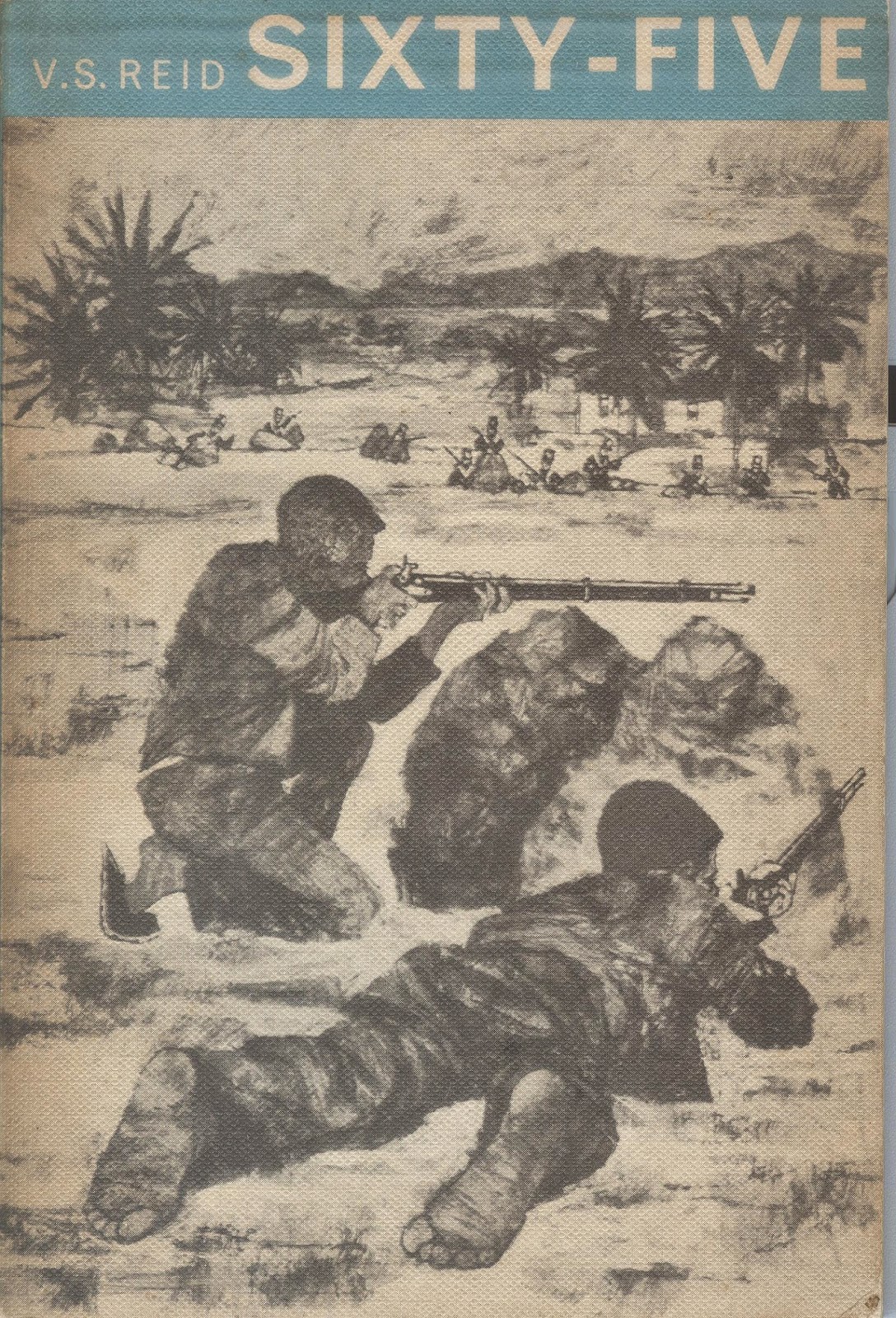
Vic Reid wrote fiction about significant aspects of our history for young adult readers, which can be also be  read by the under twelves.  His books are often found on schools’ literature book lists.

Jean D’Costa’s well known children’s books are also on schools’ literature lists, and she is the only one who is alive. She was a judge as well as the guest speaker. I was struck by her pointing out that we all have stories, and that there are so many stories to be told about Jamaica, in Jamaica.  That’s an important fact for children’s writers to embrace.

The prize money is actually quite significant, more in keeping with awards around the world. The competition is to be held every other year.  So we now have our writing awards again and  there are two for children’s literature. Children’s writers, we can’t complain. The majority of the entries were for the Una Marson award. I hope that we see a significant change in that in the future. Children’s writers, you have time to write your YA novel or children’s stories/novel for the next competition. Grab the opportunity and write.


Photos of Awards from the top: Above  centre: the winners: Janet Morrison, Jean D'Costa Award; Donna Hemans, Una Marson Award; Diana McCaulay, Vic Reid Award

Above left: Me giving Diana her award

Next above left:Jean D'Costa

Above centre: Tanya Batson Savage, Chair JaWS; Scarlette Beharie, publicist; Kalilah Enriquez, Vice Chair, JaWS; Diane Browne, Board Member

Friday, February 13, 2015

The Launch of the Lignum Vitae Writing Awards - Jamaica: meaningful awards, meaningful monetary prizes


On Tuesday , February 10, 2015, the Lignum Vitae Awards were launched under the auspices of the Jamaican Writers Society (JaWS) and the Jamaican Copyright Licensing Agency (JACOMPY). The awards are named for  outstanding Jamaican authors. The Lignum Vitae tree is indigenous to Jamaica and can be seen all over the island.

The Una Marson Award  for adult creative writing  and the Vic Reid for children’s were instituted and previously managed by the National Book Development Council of Jamaica.  The Vic Reid will now be for young adult literature and the Jean D’Costa  Award has been added for children’s. It was a well executed event.  I felt elated, as if we had achieved something, and indeed we have. The prize money, courtesy of JAMCOPY, is significant, as if we are really giving a writing prize worthy of writing prizes. It was also heartwarming (trite but true) to see the librarians and other persons who were involved with the National Book Development Council of Jamaica, who first administered the awards, and the young persons who are now carrying this on. Passing of the mantle, another trite but true expression. And even though some of the older ones are still involved, ready and willing to assist, it is great to see this transition. The president of JaWS, Tanya Batson-Savage, did  us proud in her address and comments. Literature as identity creation! I think we are to be delighted when we see that the things we really care about are in good and passionate hands.

Velma Pollard, well know Jamaican writer of poetry and prose, the guest speaker, spoke to the contribution of the writer to society: to heal, inspire and defend our values (taken from the words of a journalist, she told us), to hold a mirror up to nature (Shakespeare); the writer  is a voice . . .a meaningful silent narrative (the words of which) break into our silent spaces and may even cause us to act. Loved that ‘break into our silent spaces’.

I love to find meaning in things, events, occasions, activities, perhaps because there is always meaning, for you, for me, and we may all discover different meanings, as we are at different points on our various journeys. So I took with me the meaning of transition, of things of value to me, of things I cared about passionately, being protected by those coming after, with equal passion.

There is also one important thing about living in small places, and that is, that our great people can be known to you, have touched your life,  have guided your way. It makes all events doubly significant.

Vic Reid: (His son was at the launch, which I think was lovely). I think that Vic Reid was the first Jamaican writer who made me aware that books for older children,  as opposed to folktales and picture storybooks for younger children, were being written by a Jamaican. I think I was young. I’m not saying that there weren’t others; I’m just saying that was the emotional tie for me. I also like that he wrote historical fiction. I love reading about how real events may have affected ordinary people. What better way to understand history. Hence my own time travel adventures to real events in our history.

Una Marson: I tell a true story of a steamer trunk of books in the house in which I lived as a child. Amongst them was a book written by a woman, a Jamaican woman, with her picture in the front. That’s when I discovered that black people wrote books. I’m not saying that that is how my childlike mind actually analysed it, but I know that I was astonished and fascinated.  If she could do it, then so could I. I think that was Una Marson. I do not know why I think so. Then wonderful connection! My grandmother acted in a play called London Calling at the Ward Theatre, written by Una Marson. I wasn’t around then, but I found the playbill amongst my grandmother’s things. It feels as if my grandmother was part of our creative history, as if we were there in the beginning, and so the creativity was passed on.

Jean D’Costa: Yes, I know her, and she actually was our guest speaker when we were trying to revive the Children’s Writers Circle a few years ago. I like her writer’s voice. It speaks to me. My favourite book of hers is Voice in the Wind, which regretfully is out of print. It is one of my favourite children’s books by a Caribbean or any other author.  I think of this book as a quiet book which ‘may break into my silent spaces’, as I snuggle in bed under a comforter (it is rather cool here now, and it is quite often cool when it rains). It has a mystery, a bit of the unexplained. It is not the magical realism of our cultural paranormal, duppy stories or mystic religion. It is rather that which we share as all human beings, the unexplained.

And what is the point of this post, once I told you about the awards, you might ask. I think that:

1)      it is the continuity from generation to generation, because without that the cultural  thread is broken;

2)      it is the making of meaning; what we take away from any event or book which we recognize as a part of our lives or the lives of our ancestors, and which so emboldens us, that it keeps us writing for the next generation.

It is of note that the Lignum Vitae means ‘wood of life’.